Bushcraft Bow and Arrow
Creating technology from sticks and stones... literally.
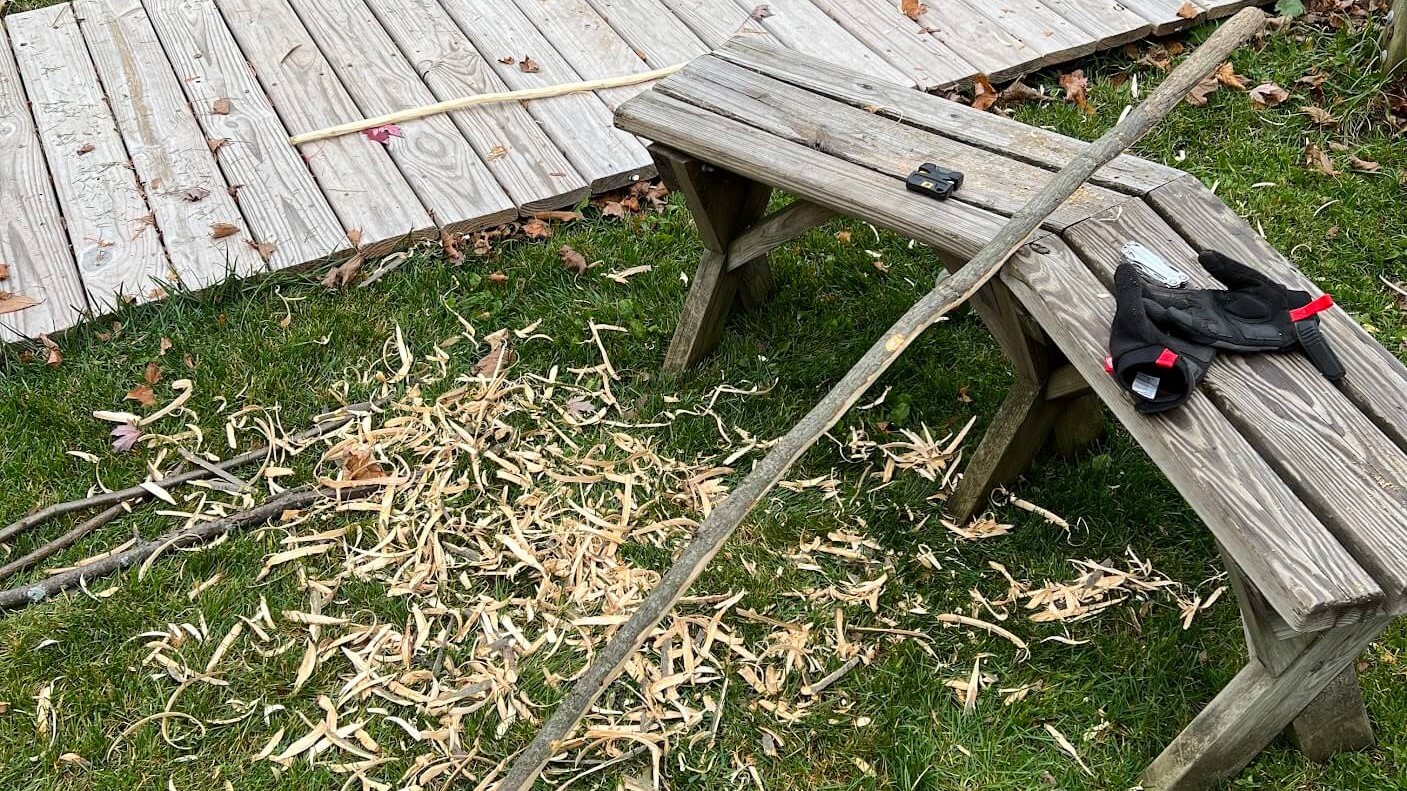
Outside of engineering in a traditional sense, I spend a lot of time practicing bushcraft—building and problem-solving in the woods with minimal tools and materials. Each winter, my friends and I head out into the wilderness with only what we can carry, constructing shelters from scratch and spending the night exposed to the elements. It’s a hands-on exercise in resourcefulness, constraint, and practical design.
This project started during a hike, when I found a suitable piece of hickory and decided to try building a functional bow from raw materials. Working entirely by hand, I removed the bark, shaped the limbs, and carefully preserved the natural grain to maintain strength and flexibility. The process required balancing material removal with structural integrity—too much carving in the wrong place, and the bow would fail under tension.
For the string, I used paracord I already had on hand. I then carved a matching arrow from another hickory branch, cutting a notch for nocking and shaping the shaft for balance. The entire system was built in a single day through iterative carving and testing, gradually refining the form until it could store and release energy effectively.
The final result was a fully functional bow capable of launching an un-fletched arrow with surprising accuracy and force. At around 50 feet, it was both stable and powerful—demonstrating that even with minimal tools and raw materials, it’s possible to create a viable mechanical system.
This project is a simple but meaningful exploration of first principles: understanding materials, working within constraints, and building something functional from the environment itself.