FPV Racing Drones
Engineering custom quadcopters for speed and impact.
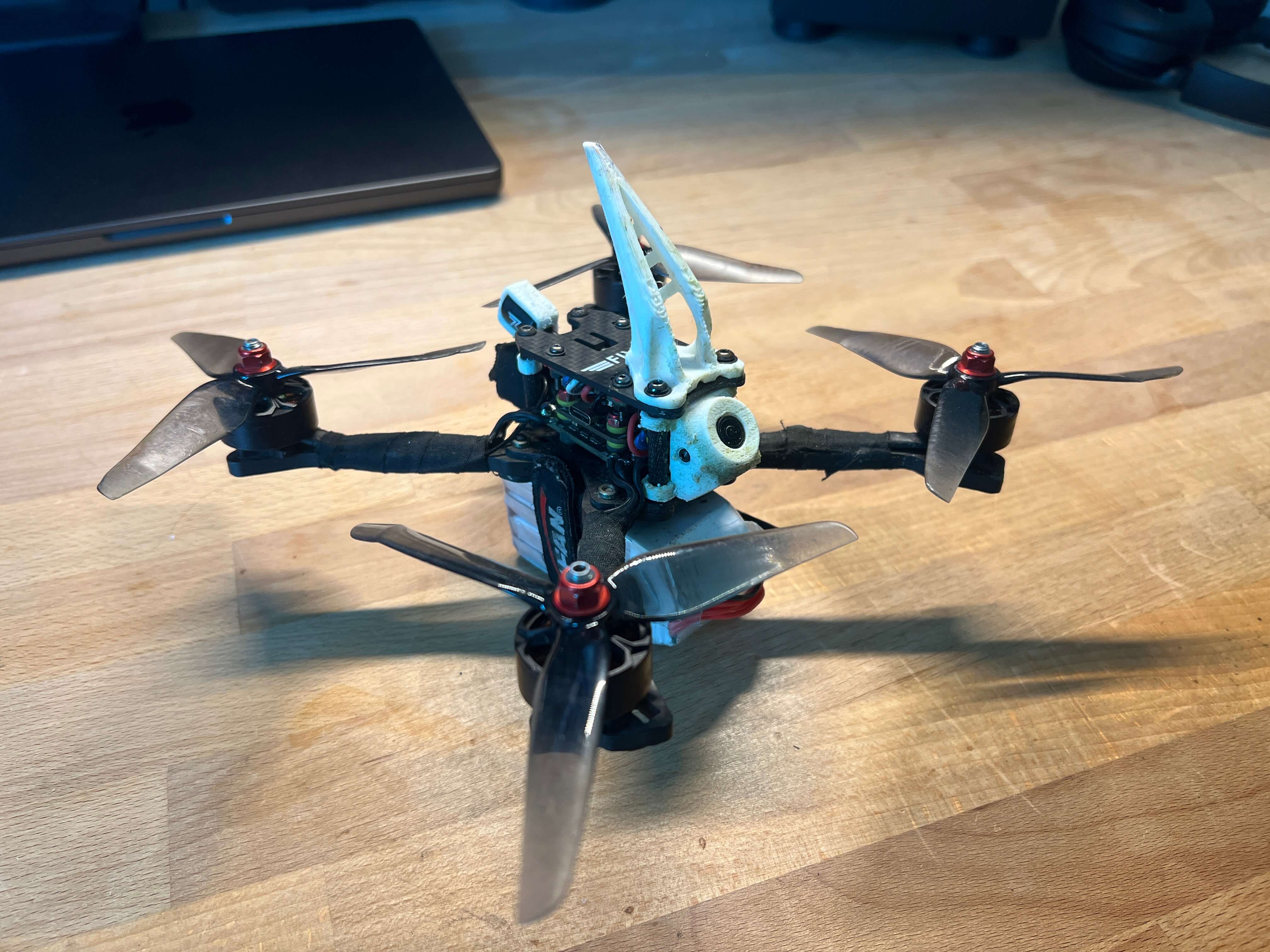
I got into FPV drone racing shortly after moving to Charleston, initially as a way to meet people and get out of the apartment. What started as a social outlet quickly turned into a hands-on engineering pursuit. After connecting with a local racing group, I began building my own drones from the ground up—small, high-speed 4S quadcopters designed specifically for competitive racing.
Each build is fully assembled by me, from component selection to final configuration. While the core architecture follows standard FPV conventions—flight stack, brushless motors, and Betaflight firmware—the real work has been in customization. I’ve designed and 3D printed a range of components tailored to my flying style, including camera mounts, antenna brackets, and aerodynamic fins. These iterative tweaks are less about novelty and more about dialing in performance where it actually matters on the track.
The biggest engineering challenge has been durability. Racing drones don’t fail gracefully—they slam into gates, concrete, and other drones at high speed. Early on, crashes meant frequent repairs and constant part replacement. Over time, I shifted my focus toward mechanical resilience: identifying failure points, redesigning parts to absorb or deflect impact, and making critical components easily replaceable. This turned the project into something closer to reliability engineering than simple assembly.
The result is a drone I trust to survive my own flying. While many racers bring multiple backups, I typically compete with a single quad. That constraint forced a level of robustness that now pays off in consistency and confidence. Instead of worrying about breaking hardware, I can focus entirely on improving as a pilot.
This project sits at the intersection of rapid prototyping and real-world stress testing—where design decisions are validated (or disproven) at 60+ mph.